Open Today Sales: 9 AM-8 PM


Hours:
Open Today Sales: 9 AM-8 PMOpen Today Service: 7 AM-6 PMOpen Today Parts: 7 AM-6 PM
Location
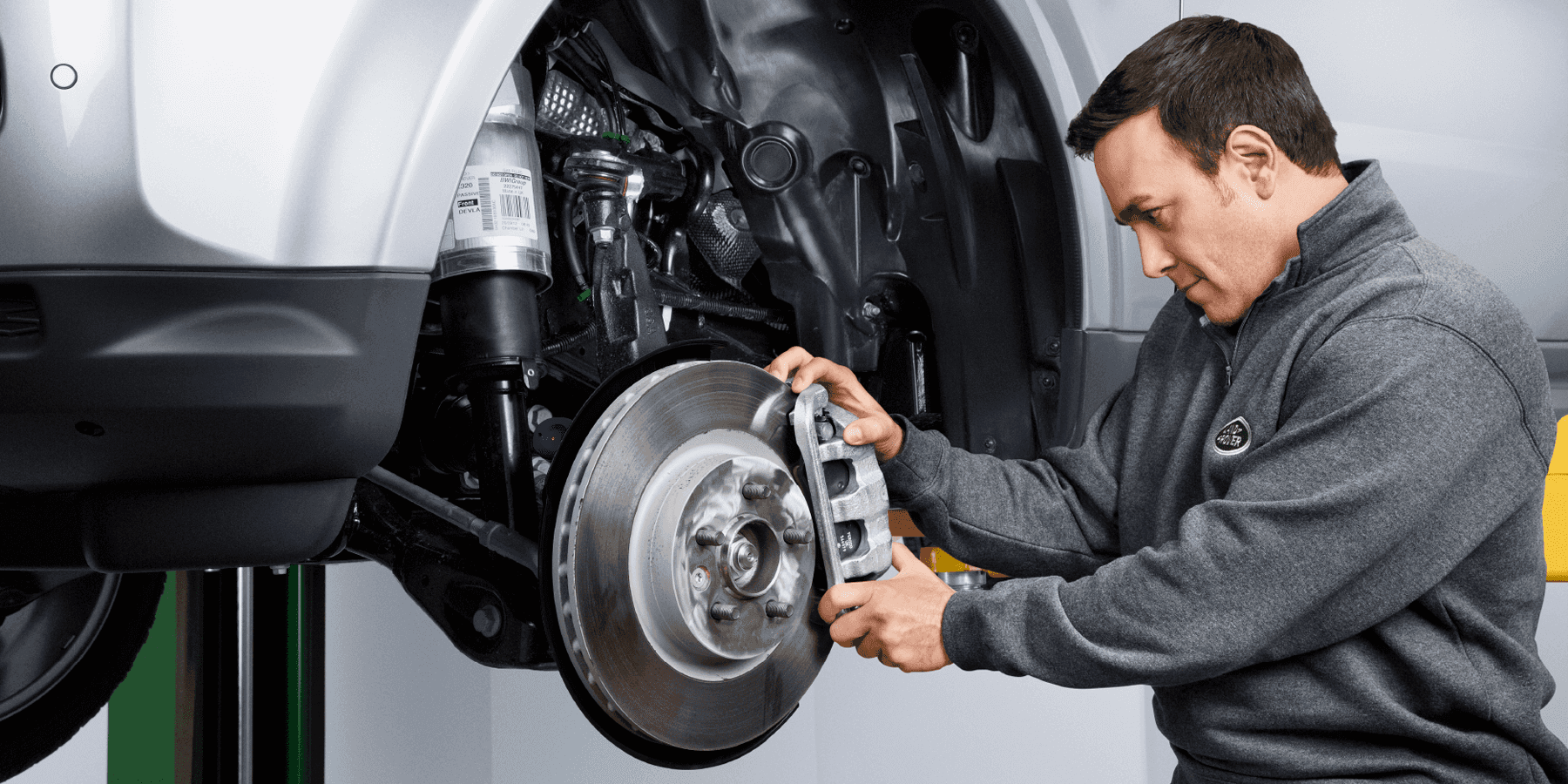
Land Rover brake systems are engineered for both on-road refinement and off-road capability. All current Land Rover models use electronic parking brakes that require certified diagnostic software to service correctly. Attempting to compress the rear caliper piston manually without the proper software retraction will damage the EPB motor, turning a routine brake job into a costly repair.
Road salt from October through April accelerates rotor surface corrosion, stiffens caliper slide pins, and ages brake hoses faster than dry-climate use. For Defender owners who also use their vehicles off-road, mud and water exposure compounds this.
Annual brake inspections are the practical standard for West Michigan Land Rover owners.
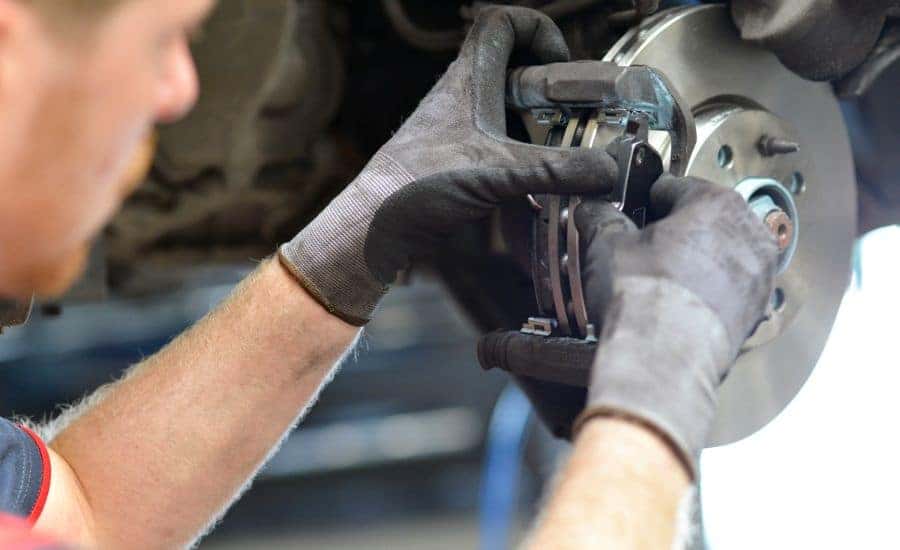
Land Rover specifies brake fluid replacement every two years regardless of mileage. Brake fluid absorbs moisture from the air over time, lowering its boiling point. This is one of the most commonly deferred Land Rover maintenance items. We flag it for every vehicle approaching the two-year mark.
How often should Land Rover brakes be inspected?
At minimum once a year. In Grand Rapids, with six months of road salt, annual inspection is standard. Brake pad wear sensors will alert you when pads approach their limit, but a physical inspection also covers rotors, fluid, and calipers that sensors do not monitor.
How often should Land Rover brake fluid be replaced?
Every two years, regardless of mileage. Land Rover specifies this interval because brake fluid absorbs moisture from the atmosphere over time, not because of mileage wear.